
Why Orange County's Water Is So Hard, and What It Does to Your Pipes
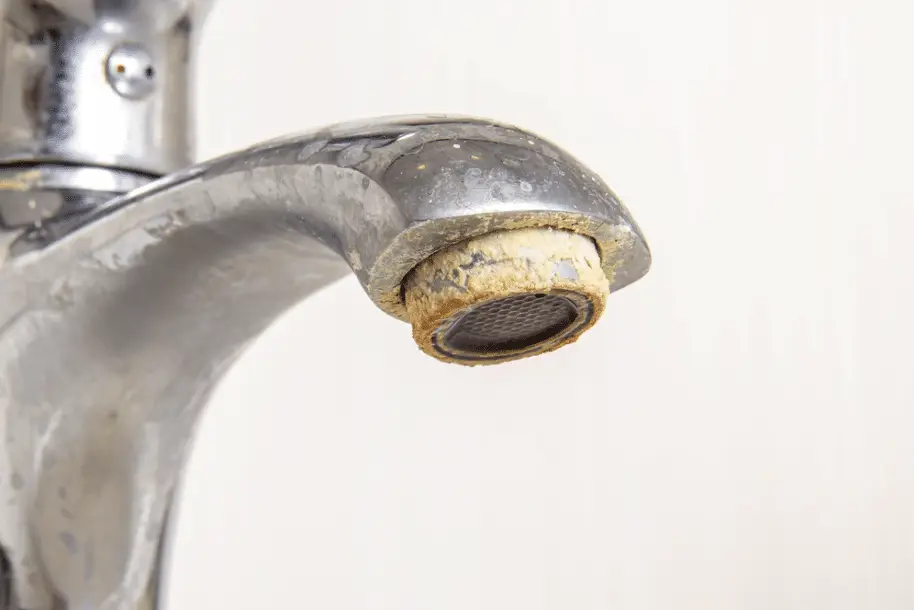
If you live in Orange County, you’re probably familiar with the white crust that forms on your showerhead or sink. Maybe your glasses come out of the dishwasher spotted, or your water heater has started popping and rumbling like there’s gravel in the bottom. In a way, there is.
That’s hard water, and OC is full of it. Most of our tap water comes from two places: a large groundwater basin under north and central Orange County, and water imported from the Colorado River and Northern California. Both have lots of dissolved calcium and magnesium. In Anaheim, groundwater averages 18 grains per gallon of hardness, which is well past the line the U.S. Geological Survey considers “very hard.” Here’s where that hardness comes from, what it does to your plumbing, and which fixes are worth the money.
What Makes Water Hard?
Hard water carries a lot of dissolved calcium and magnesium. Rain has almost no minerals in it, but as it soaks into the ground and moves through rock and sediment, or flows down a river for hundreds of miles, it picks those minerals up. The longer and farther it travels, the more it collects.
Hardness is reported in two units: Water utilities usually use milligrams per liter (mg/L), which is the same as parts per million (ppm). Water softener companies tend to use grains per gallon (gpg). One grain per gallon equals 17.1 mg/L.
The U.S. Geological Survey sorts water into four bands:
| Classification | mg/L (ppm) | Grains per gallon |
|---|---|---|
| Soft | 0–60 | 0–3.5 |
| Moderately hard | 61–120 | 3.5–7 |
| Hard | 121–180 | 7–10.5 |
| Very hard | Over 180 | Over 10.5 |
Keep that 180 mg/L line in mind. Every Orange County water source we looked at averages above it.
Where Orange County’s Water Comes From
Orange County’s water doesn’t come from just one place. It has several sources, and what comes out of your tap depends on the mix your city or water district uses.
The Groundwater Basin Under North and Central OC
Much of the county pulls water from the Orange County Groundwater Basin, an aquifer under north and central Orange County. The Orange County Water District manages it, and it supplies about 85% of the drinking water for roughly 2.5 million people.
Groundwater is hard for a simple reason: It spends a lot of time underground. The basin is refilled with Santa Ana River water, local rain, imported water, and purified recycled water from OCWD’s Groundwater Replenishment System. All of it moves slowly through sand, gravel, and clay before it reaches a well, dissolving minerals the whole way. In Anaheim’s 2025 testing, groundwater averaged 316 mg/L, or 18 grains per gallon. Irvine Ranch Water District’s local groundwater sources came in at 12.5 and 17.1 grains per gallon the same year.
Imported Water From the Colorado River and Northern California
The rest of the county’s water travels a long way to get here. The Metropolitan Water District of Southern California brings it in from the Colorado River and from Northern California. Colorado River water is the harder of the two, with roughly twice the dissolved salts of Northern California water, which it picks up on its way through the desert Southwest.
Even after blending and treatment, imported water falls within the very hard range.
Why Your City’s Number Is Different From the Next Town Over
Since each OC city blends these water sources differently, hardness changes from one city to the next and even across a single city. Take Anaheim, for example: Neighborhoods east and south of the 57/91 interchange mostly get imported water, while central and west Anaheim mostly get groundwater or a blend. Across the whole city, hardness ranged from 9 to 25 grains per gallon in 2025.
Blends also shift through the year depending on what’s available, so your water can feel a little different in August than it did in February. We cover local water conditions city by city on our Buena Park and Huntington Beach pages, and you can see all the cities we serve here.
Is Orange County Tap Water Safe to Drink?
Hardness and safety are two different things. Hardness isn’t harmful — it’s just annoying to deal with itchy skin, less “clean”-feeling hair, spotty dishes, and a shorter lifespan for your water-drawing appliances.
Safety is judged against drinking water standards, and every city’s utility tests against them. Each one publishes its results once a year in a water quality report, also called a Consumer Confidence Report. To find yours, search your city or water district’s name plus “water quality report,” or check your water bill.
What Hard Water Actually Does to Your Plumbing
Hard water leaves minerals behind wherever water gets heated, sits still, or dries. Over the years, that adds up to real wear, mostly on appliances and fixtures.
Water Heaters Take the Biggest Hit
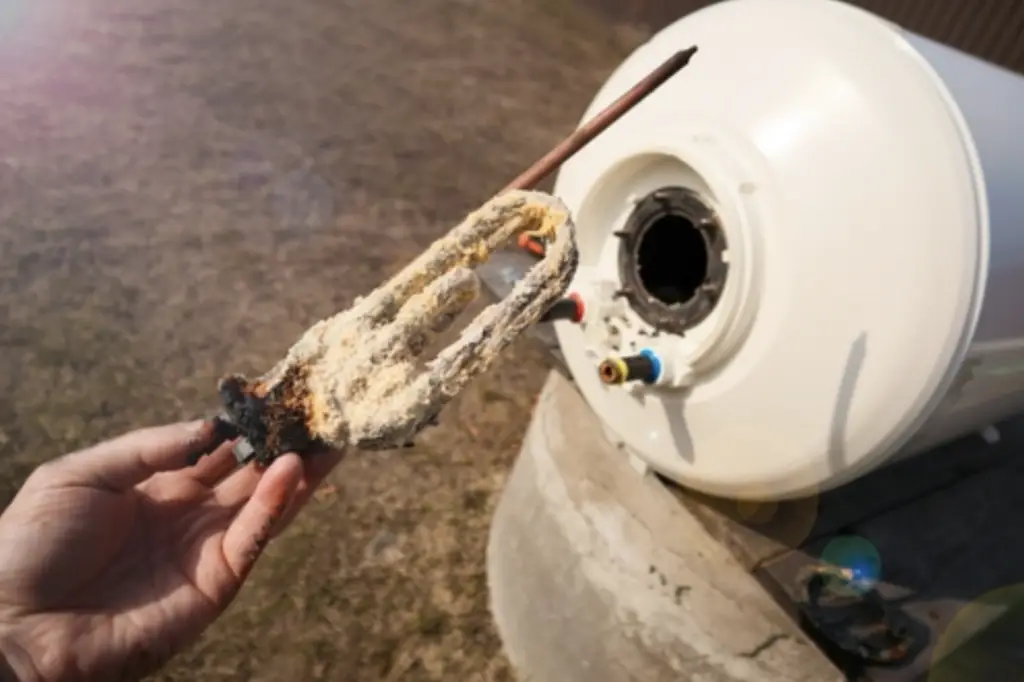
Heat pulls calcium out of water faster than anything else. In a tank water heater, those minerals settle to the bottom as sediment. Water trapped under that layer boils into steam bubbles, which is the popping and rumbling you hear. The sediment also sits between the burner and the water, so the heater works harder, recovers more slowly, and runs out of hot water sooner than it used to.
Tankless water heaters don’t collect sediment the same way, but scale still builds up inside the heat exchanger and reduces efficiency until the unit is descaled.
Flushing is the cheapest way to get more years out of a water heater here. If yours is already noisy or short on hot water, our water heater service can tell you whether it needs a flush, a repair, or a replacement.
Faucets, Showerheads, and Valves
Scale clogs the small screens in faucet aerators and the holes in showerheads. That’s why pressure at one fixture can drop while the rest of the house is fine. It also wears down faucet cartridges and can cause a toilet’s fill valve to fail to seal, which shows up as a toilet running on its own. None of these are big repairs, but they keep coming back.
Washing Machines, Dishwashers, and Other Appliances
Anything that heats or holds water picks up scale on its heating elements and inlet screens. Hard water also works against soap, so you use more detergent and still get soap scum, cloudy glassware, and laundry that comes out stiff.
Inside the Pipes
Honestly, hard water isn’t as harsh on your pipes as it is on your fixtures and appliances. When we see a house that needs repiping, hard water is rarely the main reason, especially if the house has copper supply lines.
With galvanized steel pipes, though, hard water is a bigger problem. Galvanized pipe rusts from the inside, and that rough surface gives minerals something to grab onto. Over decades, the opening inside the pipe narrows until water pressure drops all over the house. At that point, no filter or softener will bring the pressure back. Replacing old galvanized lines is the permanent fix.
Galvanized steel pipes were standard when many Orange County homes were built, and they’re still being used in most of those houses today. That’s why it’s important to know what pipe material your home uses and keep an eye on the impact hard water might be having.
Drains
Mineral scale and soap scum can coat the inside of drain lines, narrowing them and giving grease and debris something to catch on. When a drain keeps clogging, hydro jetting scours that buildup off the pipe walls instead of just punching a hole through the clog.
Low pressure in an older home, or a water heater that’s started making noise? Get a free assessment, and we’ll tell you what’s actually going on.
Do I Have Hard Water? How to Check
In most of Orange County, the short answer is yes. The more useful question is how hard, and you can find your actual number in a few minutes.
Signs Around the House
- White or chalky crust on faucets, showerheads, and glass shower doors
- Spots or a cloudy film on dishes and glassware
- Soap and shampoo that barely lather
- Laundry that comes out stiff or dull
- A tank water heater that pops or rumbles
A lot of people also say their skin and hair feel drier after showering with hard water.
Read Your Utility's Water Quality Report
Your water utility has already tested your water and published the number.
Find your report.
Search your city or water district’s name plus “water quality report.” Most post a new one each spring or summer covering the year before.
Look for "Hardness" or "Total Hardness."
It’s usually near the bottom of the results table, under unregulated or secondary items, since it isn’t a health standard.
Check the units
Many reports list it twice: once in ppm (mg/L) and once in grains per gallon.
Check which column applies to you
Many OC reports list groundwater and imported water separately, then give a range. If you don’t know which source serves your street, the range shows you the low and high end.
Hardware-store water test strips give a rough reading in about a minute. Home kits are approximate, though, so if you need an exact number for your address, a state-certified lab can test a sample.
What You Should Do About It
First of all, you don’t have to treat hard water. Plenty of OC homes do fine without treatment. The real question is whether your comfort and what the buildup costs you in maintenance and early replacements outweigh what a treatment system costs to buy and keep running. Here are your options, with their trade-offs.
Keep up with maintenance. Flush the water heater on schedule, soak clogged showerheads and aerators in vinegar, and descale a tankless unit when it’s due. It’s the cheapest approach, and for many households, it’s enough.
Install an ion-exchange water softener. This is the traditional salt-based softener. Water runs through a tank of resin beads that swap out the calcium and magnesium for sodium, or potassium if you use potassium pellets instead of salt. It does a good job protecting water heaters and fixtures. The tradeoffs: you keep buying salt, the system needs occasional service, softened water carries a small amount of added sodium, and each regeneration cycle sends salty brine down the drain.
Be careful with salt-free conditioners. These systems don’t remove calcium and magnesium. They change how the minerals behave so they’re less likely to stick as scale. Results vary, and the marketing claims vary even more, so ask for independent test results before you buy.
Don’t count on a filter to soften. Most pitcher, faucet, and fridge filters improve taste and take out chlorine, but they remove little hardness.
Where a plumber helps is in figuring out whether the problem is hard water at all. A noisy water heater, a running toilet, and low pressure can each have more than one cause, so it’s worth knowing which one you’re dealing with before you pay for a fix.
When Hard Water Is a Problem, and When It Isn’t
Hard water explains a lot of small, annoying things: crusty fixtures, spotty dishes, a water heater that’s aging faster than it should. It usually doesn’t explain leaks, a sudden drop in pressure, or brown water in an older home. Those point to the pipes themselves.
Marvelous Plumbing is a family-owned, licensed plumbing company based in Buena Park. When we come out, we’ll tell you which problem you actually have and what it takes to fix it. If a flush and a new aerator will do the job, that’s what we’ll recommend.
Call Now: 657-279-5358
Frequently Asked Questions About Hard Water
Yes. Most tap water in Orange County tests above 180 mg/L, or 10.5 grains per gallon, which is the USGS threshold for very hard water. Anaheim’s water ranged from 9 to 25 grains per gallon in 2025. Your utility’s annual water quality report lists the number for your area.
Hardness doesn’t make water unsafe, and there’s no health limit for it. Whether your tap water meets drinking water standards is covered in your utility’s annual water quality report, which every water provider in the county publishes. That’s the best place to check for your address.
Usually your city or local water district. The Orange County Water District manages the groundwater basin and supplies water to cities and districts, but it doesn’t bill homes directly. Whoever’s name is on your water bill is who to call, and they’re the ones who publish your water quality report.
Usually not. If pressure is low at a single faucet or showerhead, cleaning the aerator or replacing the showerhead often fixes it. If it’s low throughout an older house, the usual cause is galvanized pipe that has narrowed with rust and scale over decades. Softening the water won’t reopen it. That typically calls for repiping.
It isn’t a health risk, but many people find it leaves skin feeling drier and hair duller, mostly because soap and shampoo don’t rinse off as cleanly. How much softening helps varies a lot from person to person.